रूपांतरण दरें क्यों तय करती हैं कि आपका ऑनलाइन स्टोर वास्तव में बिक्री करता है या नहीं
ऑनलाइन स्टोर लॉन्च करना रोमांचक है। पहले कुछ दिन आम तौर पर उम्मीद से भरे होते हैं। आप उत्पाद अपलोड करते हैं, दोस्तों के साथ लिंक साझा करते हैं, शायद कुछ विज्ञापन चलाते हैं, और फिर डैशबोर्ड की जांच शुरू करते हैं।
आगंतुक आ रहे हैं।
लेकिन आदेश नहीं हैं।
यह नए ईकॉमर्स विक्रेताओं के सामने आने वाली सबसे आम कुंठाओं में से एक है। आप देखते हैं कि लोग आपकी वेबसाइट पर आते हैं, कभी-कभी कई पेज ब्राउज़ भी करते हैं, लेकिन वे बिना कुछ खरीदे चले जाते हैं।
यह वह जगह है रूपांतरण दर महत्वपूर्ण बनें।
रूपांतरण दरों को समझने से आपको एक सरल लेकिन शक्तिशाली प्रश्न का उत्तर देने में मदद मिलती है:
विज़िटर ग्राहक क्यों नहीं बन रहे हैं?
अनुमान लगाने के बजाय, आप सरल एनालिटिक्स का उपयोग करके यह समझ सकते हैं कि लोग आपके स्टोर पर क्या कर रहे हैं और बिक्री करने की आपकी संभावनाओं को बेहतर बनाते हैं।
आइए हम इसे सरल शब्दों में तोड़ते हैं।
रूपांतरण दर का वास्तव में क्या मतलब है
ई-कॉमर्स में, रूपांतरण दर इसका सीधा सा मतलब है कि आपकी वेबसाइट पर कार्रवाई पूरी करने वाले विज़िटर का प्रतिशत।
अधिकांश समय, यह क्रिया खरीदारी करने के लिए होती है।
सूत्र सरल है।
रूपांतरण दर =
(आदेशों की संख्या ÷ आगंतुकों की संख्या) × 100
उदाहरण के लिए:
अगर आपके स्टोर को मिलता है 100 विज़िटर्स और 5 लोग कुछ खरीदते हैं, आपकी रूपांतरण दर है:
5 ÷ 100 × 100 = 5 प्रतिशत
इसका मतलब है 5 प्रतिशत विज़िटर ग्राहक बन गए।
यह संख्या आपको यह समझने में मदद करती है कि आपकी वेबसाइट आगंतुकों को खरीदारों में कितनी प्रभावी रूप से बदल देती है।
एक अच्छी रूपांतरण दर क्या मानी जाती है
कई नए विक्रेता एक ही सवाल पूछते हैं।
“एक अच्छी रूपांतरण दर क्या है?”
इसका उत्तर उद्योग और उत्पाद के प्रकार पर निर्भर करता है।
हालांकि, कई अध्ययन हमें उपयोगी बेंचमार्क देते हैं।
के मुताबिक Shopify ईकॉमर्स बेंचमार्क डेटा (2024), वैश्विक स्तर पर औसत ईकॉमर्स रूपांतरण दर बीच में आती है 2 प्रतिशत और 3 प्रतिशत।
द्वारा किया गया एक अन्य अध्ययन IRP कॉमर्स (2023) पाया कि शीर्ष प्रदर्शन करने वाले ईकॉमर्स स्टोर तक पहुंच सकते हैं 5 प्रतिशत या उससे अधिक।
तो व्यावहारिक रूप से:
1 प्रतिशत रूपांतरण दर
इसका मतलब है कि आपका स्टोर संघर्ष कर रहा है।
2 से 3 प्रतिशत
एक सामान्य ईकॉमर्स रेंज है।
4 से 5 प्रतिशत
बहुत अच्छा माना जाता है।
5 प्रतिशत से अधिक
आमतौर पर इसका मतलब है कि स्टोर का अनुभव बहुत अच्छा काम कर रहा है।
भारत में एक नए विक्रेता के लिए, यहां तक कि पहुंचने के लिए 2 प्रतिशत एक अच्छी शुरुआत है।
क्यों कई ईकॉमर्स स्टोर रूपांतरणों से जूझते हैं
आगंतुकों को प्राप्त करना एक चुनौती है।
लेकिन उन्हें खरीदने के लिए राजी करना पूरी तरह से एक अलग चुनौती है।
कई नए विक्रेता मानते हैं कि समस्या ट्रैफ़िक है।
लेकिन अक्सर, असली मुद्दा वेबसाइट के अंदर ही होता है।
उदाहरण के लिए, खोज करने वाले विज़िटर की कल्पना करें:
“कॉटन बेडशीट किंग साइज़”
वे आपकी वेबसाइट पर क्लिक करते हैं।
लेकिन जब वे पेज पर आते हैं:
- चित्र अस्पष्ट हैं
- कीमत तुरंत दिखाई नहीं दे रही है
- डिलीवरी की जानकारी गायब है
- वेबसाइट धीरे-धीरे लोड होती है
कुछ ही सेकंड में, वे चले जाते हैं।
यह व्यवहार बेहद सामान्य है।
के मुताबिक Google उपभोक्ता अंतर्दृष्टि अनुसंधान (2023), यदि लोड होने में 3 सेकंड से अधिक समय लगता है, तो 53 प्रतिशत उपयोगकर्ता मोबाइल साइट छोड़ देते हैं।
इसका मतलब है कि छोटे मुद्दे भी रूपांतरण दरों को नुकसान पहुंचा सकते हैं।
सरल एनालिटिक्स आपको विज़िटर को समझने में कैसे मदद करता है
एनालिटिक्स टूल आपको दिखाते हैं कि विज़िटर वास्तव में आपकी वेबसाइट पर क्या कर रहे हैं।
इसे एक भौतिक दुकान के अंदर ग्राहकों को देखने जैसा समझें।
एक वास्तविक स्टोर में, आप देख सकते हैं:
- जहां लोग चलते हैं
- वे कौन से उत्पाद उठाते हैं
- जब वे दुकान से बाहर निकलते हैं
ऑनलाइन एनालिटिक्स वही काम करता है।
उपकरण जैसे गूगल एनालिटिक्स ट्रैक व्यवहार जैसे:
- आपके स्टोर पर कितने लोग आते हैं
- वे कौन से पेज देखते हैं
- वे कितने समय तक रुकते हैं
- जहां वे वेबसाइट छोड़ते हैं
यह जानकारी आपको यह समझने में मदद करती है कि ग्राहक कहां रुचि खो देते हैं।
अपनी वेबसाइट पर ग्राहक यात्रा को समझना
हर ईकॉमर्स विज़िटर एक यात्रा का अनुसरण करता है।
यह आमतौर पर इस तरह दिखता है:
- वे आपके स्टोर की खोज करते हैं
- वे एक उत्पाद पृष्ठ खोलते हैं
- वे उत्पाद पर विचार करते हैं
- वे इसे कार्ट में जोड़ते हैं
- वे चेकआउट पूरा करते हैं
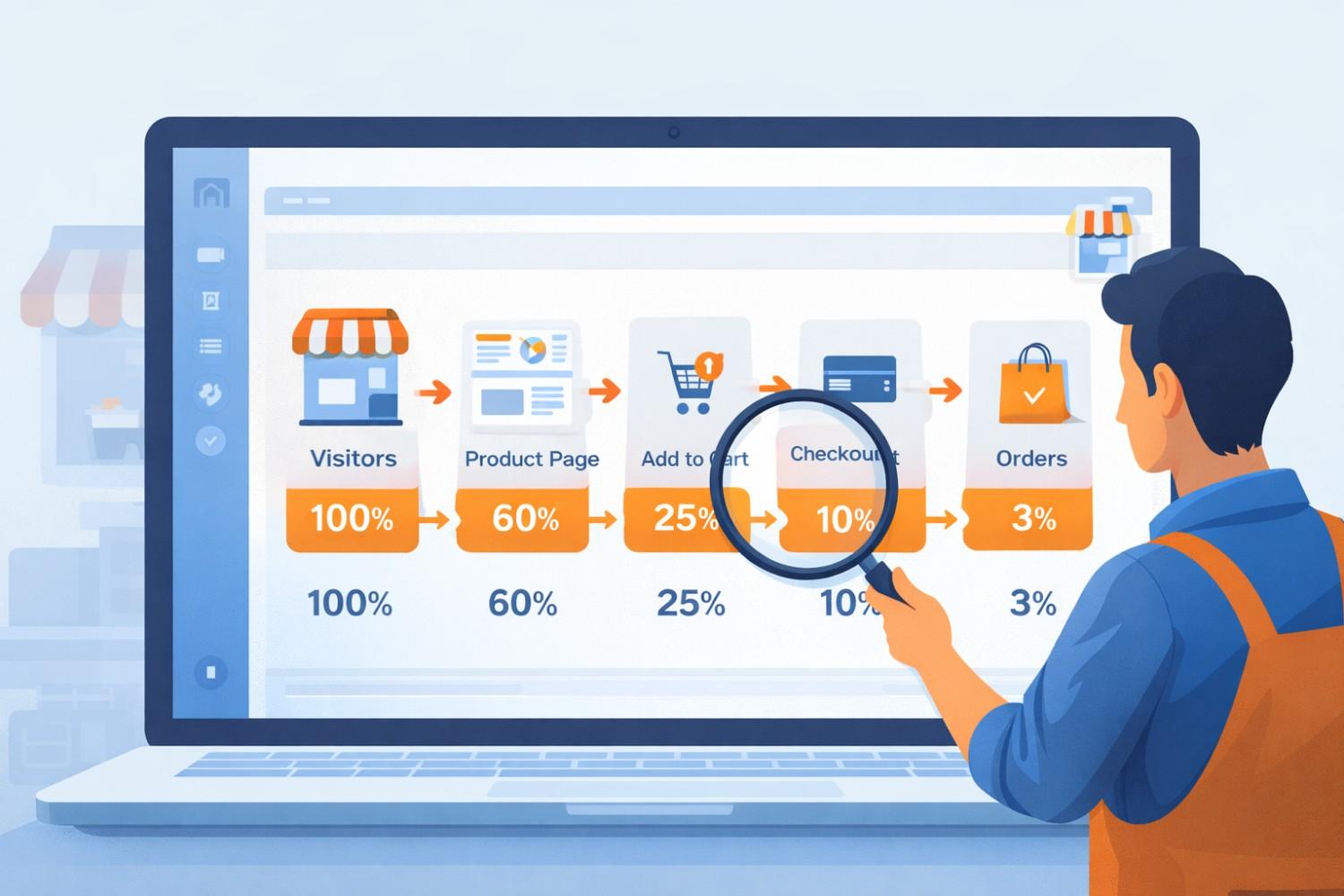
Analytics आपको यह देखने में मदद करता है कि लोग इस यात्रा से कहाँ बाहर निकलते हैं।
उदाहरण के लिए:
100 विज़िटर आपकी वेबसाइट खोलते हैं।
60 उत्पाद पृष्ठ देखें।
25 कार्ट में एक उत्पाद जोड़ें।
10 रीच चेकआउट।
5 खरीदारी पूरी करें।
इसका मतलब है कि अधिकांश आगंतुक बीच में छोड़ देते हैं कार्ट और चेकआउट।
अब आप जानते हैं कि समस्या कहां है।
हो सकता है कि शिपिंग लागत बहुत देर से दिखाई दे।
हो सकता है कि चेकआउट प्रक्रिया जटिल लगे।
एनालिटिक्स के बिना, आप इसे कभी भी स्पष्ट रूप से नहीं देख पाएंगे।
रूपांतरण दरों में सुधार का एक सरल उदाहरण
आइए हम जयपुर के एक छोटे विक्रेता की कल्पना करें जो हाथ से बने चमड़े के पर्स बेचता है।
उनकी वेबसाइट प्राप्त करती है 1000 विज़िटर प्रति माह।
लेकिन केवल 10 ऑर्डर होता है।
इसका मतलब है कि रूपांतरण दर इस प्रकार है:
10 ÷ 1000 × 100 = 1 प्रतिशत
एनालिटिक्स की जाँच करने के बाद, विक्रेता को कुछ दिलचस्प लगता है।
अधिकांश विज़िटर उत्पाद पृष्ठ को अंदर छोड़ देते हैं 10 सेकंड।
यह एक समस्या का सुझाव देता है।
विक्रेता तीन चीजों में सुधार करता है:
- बेहतर उत्पाद फ़ोटो जोड़ता है
- चमड़े की गुणवत्ता स्पष्ट रूप से समझाता है
- डिलीवरी टाइमलाइन और रिटर्न पॉलिसी जोड़ता है
कुछ ही हफ्तों में, संख्याएं बदल जाती हैं।
अब स्टोर को मिलता है 1000 आगंतुकों से 30 ऑर्डर।
रूपांतरण दर बन जाती है 3 प्रतिशत।
आवागमन में वृद्धि नहीं हुई।
लेकिन स्पष्टता, बेहतर रूपांतरण।
सामान्य समस्याएं जो रूपांतरण दर को कम करती हैं
कई ईकॉमर्स वेबसाइटें साधारण समस्याओं के कारण ग्राहकों को खो देती हैं।
सबसे आम समस्याओं में से कुछ में शामिल हैं:
वेबसाइट की धीमी गति।
भ्रमित करने वाले उत्पाद विवरण।
खराब उत्पाद की तस्वीरें।
छिपे हुए डिलीवरी शुल्क।
लंबे चेकआउट फॉर्म।
विश्वास एक अन्य प्रमुख कारक है।
भारतीय ग्राहक विशेष रूप से नई वेबसाइटों को लेकर सतर्क रहते हैं।
चीजों को प्रदर्शित करना जैसे:
- क्लियर रिटर्न पॉलिसी
- ग्राहक समीक्षाएँ
- UPI या COD जैसे भुगतान विकल्प
खरीदार का विश्वास बढ़ा सकता है।
प्रोडक्ट पेज सबसे ज्यादा मायने क्यों रखते हैं
उत्पाद पृष्ठ वे होते हैं जहाँ खरीदारी के निर्णय होते हैं।
आगंतुक आमतौर पर भीतर निर्णय लेते हैं 10 से 20 सेकंड क्या वे किसी उत्पाद पृष्ठ पर भरोसा करते हैं।
एक मजबूत उत्पाद पृष्ठ में आमतौर पर शामिल होते हैं:
उत्पाद चित्र साफ़ करें
सरल उत्पाद विवरण
मूल्य दृश्यता
डिलीवरी की जानकारी
ग्राहक समीक्षाएँ
मान लीजिए कि आप तांबे की पानी की बोतलें बेचते हैं।
एक कमजोर विवरण यह कह सकता है:
“स्वास्थ्य लाभ के लिए प्रीमियम तांबे की बोतल”
लेकिन एक मजबूत विवरण यह कह सकता है:
“यह तांबे की बोतल घर या कार्यालय में दैनिक पेयजल के लिए उपयुक्त है। तांबे की बोतलों का इस्तेमाल आमतौर पर पारंपरिक भारतीय कल्याण पद्धतियों में किया जाता है। बोतल टिकाऊ, पुन: उपयोग करने योग्य और ले जाने में आसान है.”
इससे खरीदार को स्पष्टता मिलती है।
स्पष्टता रूपांतरणों को बढ़ाती है।
भारत में मोबाइल का अनुभव क्यों मायने रखता है
आज भारत में, ज्यादातर ईकॉमर्स ट्रैफिक मोबाइल फोन से आता है।
के मुताबिक स्टेटिस्टा डिजिटल कॉमर्स डेटा (2024), ओवर भारत में 70 प्रतिशत ईकॉमर्स ट्रैफिक मोबाइल डिवाइस से आता है।
इसका मतलब है कि आपके स्टोर को मोबाइल पर आसानी से काम करना चाहिए।
छोटे मुद्दे जैसे:
बटन बहुत छोटे होने के कारण
चेकआउट फ़ॉर्म भरना मुश्किल हो रहा है
धीमी गति से लोड होने वाली छवियां
रूपांतरण दरों को काफी कम कर सकता है।
हमेशा फोन पर अपने स्टोर का परीक्षण करें।
अगर कुछ मुश्किल लगता है, तो ग्राहक शायद चले जाएंगे।
छोटे सुधार जो रूपांतरणों को बढ़ाते हैं
रूपांतरण दरों में सुधार के लिए शायद ही कभी बड़े बदलावों की आवश्यकता होती है।
अक्सर, छोटे सुधारों से बड़ा फर्क पड़ता है।
उदाहरण के लिए:
बेहतर उत्पाद तस्वीरें विश्वास को बढ़ाती हैं।
छोटे चेकआउट फ़ॉर्म निराशा को कम करते हैं।
स्पष्ट डिलीवरी समयसीमा अनिश्चितता को दूर करती है।
स्टॉक की उपलब्धता दिखाने से तात्कालिकता पैदा होती है।
एक उत्पाद पृष्ठ की कल्पना करें जो कहता है:
“स्टॉक में केवल 5 आइटम बचे हैं”
यह सरल संदेश तेजी से खरीदारी के फैसले को प्रोत्साहित कर सकता है।
ये छोटे समायोजन धीरे-धीरे आपके स्टोर के प्रदर्शन में सुधार करते हैं।
एनालिटिक्स विक्रेताओं के लिए स्पष्टता क्यों लाता है
कई नए ईकॉमर्स विक्रेता डिजिटल मार्केटिंग सलाह से अभिभूत महसूस करते हैं।
ऑनलाइन अंतहीन टिप्स हैं।
विज्ञापन चलाएँ।
seo सुधारें।
सोशल मीडिया पर पोस्ट करें।
लेकिन एनालिटिक्स स्पष्टता लाता है।
यह आपको दिखाता है कि वास्तव में आपकी वेबसाइट पर क्या हो रहा है।
अनुमान लगाने के बजाय, आप वास्तविक विज़िटर व्यवहार के आधार पर निर्णय ले सकते हैं।
यदि किसी पृष्ठ पर उच्च ट्रैफ़िक है लेकिन बिक्री कम है, तो आप जानते हैं कि उस पृष्ठ पर कुछ सुधार की आवश्यकता है।
यदि आगंतुक चेकआउट के दौरान बाहर निकलते हैं, तो चेकआउट प्रक्रिया पर ध्यान देने की आवश्यकता है।
यह स्पष्टता छोटे व्यवसायों को कदम दर कदम बेहतर बनाने में मदद करती है।
निष्कर्ष
ईकॉमर्स स्टोर चलाना केवल ट्रैफिक पाने के बारे में नहीं है।
यह आगंतुकों को ग्राहकों में बदलने के बारे में है।
यह वह जगह है रूपांतरण दर एक आवश्यक मीट्रिक बनें।
यहां तक कि रूपांतरण दर में एक छोटा सा सुधार भी राजस्व में काफी वृद्धि कर सकता है।
उदाहरण के लिए:
के साथ एक स्टोर 1000 विज़िटर और 1 प्रतिशत रूपांतरण 10 ऑर्डर मिलते हैं।
लेकिन इसमें सुधार हो रहा है 3 प्रतिशत रूपांतरण मतलब 30 ऑर्डर।
ट्रैफ़िक वही रहा, लेकिन बिक्री तीन गुना हो गई।
यही कारण है कि साधारण एनालिटिक्स के माध्यम से विज़िटर के व्यवहार को समझना शक्तिशाली है।
देखें कि लोग आपकी वेबसाइट के माध्यम से कैसे आगे बढ़ते हैं।
पहचानें कि वे कहाँ रुचि खो देते हैं।
फिर स्पष्ट जानकारी, बेहतर उत्पाद प्रस्तुति और आसान चेकआउट के साथ उन पेजों को बेहतर बनाएं।
समय के साथ, ये सुधार एक ऐसा स्टोर बनाते हैं जो न केवल आगंतुकों को आकर्षित करता है बल्कि उन्हें ग्राहकों में भी परिवर्तित करता है।
सन्दर्भ
Shopify ईकॉमर्स बेंचमार्क रिपोर्ट
Google उपभोक्ता अंतर्दृष्टि अनुसंधान
स्टेटिस्टा ईकॉमर्स मार्केट डेटा
IRP वाणिज्य उद्योग की रिपोर्ट