हर महीने ख़रीदारी करने वाले वफादार ग्राहक बनाने के लिए 2026 के लिए WhatsApp समुदाय गाइड
सुभम कुमार
-
February 17, 2026
-
एक बार ऑर्डर प्राप्त करना, फिर शून्य से फिर से शुरू करना
अपने पहले कुछ ऑर्डर प्राप्त करना रोमांचक लगता है। लेकिन अधिकांश छोटे व्यवसायों के लिए, असली चुनौती उसके बाद शुरू होती है। ऑर्डर एक बार आते हैं, फिर गायब हो जाते हैं। हर नया महीना फिर से शून्य से शुरू होने जैसा लगता है। यह वह जगह है जहाँ एक WhatsApp समुदाय भारतीय विक्रेताओं के लिए बेहद उपयोगी हो जाता है। ऑफ़र देने की जगह के रूप में नहीं, बल्कि परिचित होने, भरोसा बनाने और समय के साथ बार-बार खरीदारी करने की जगह के रूप में।
यह मार्गदर्शिका टियर 2 और टियर 3 शहरों में छोटे व्यवसाय मालिकों, घर विक्रेताओं, दुकान मालिकों और ऑनलाइन विक्रेताओं के लिए लिखी गई है, जो विज्ञापनों या जटिल टूल के बिना स्थिर मासिक ऑर्डर चाहते हैं।
एक छोटे बिज़नेस के लिए WhatsApp कम्यूनिटी का असल में क्या मतलब है
WhatsApp समुदाय एक स्ट्रक्चर्ड स्पेस है, जहां ग्राहक एक बार ख़रीदने के बाद भी आपके बिज़नेस से जुड़े रहते हैं।
बार-बार ग्राहकों का पीछा करने के बजाय, आप एक जगह बनाते हैं जहाँ:
अपडेट साझा किए जाते हैं
विश्वास धीरे-धीरे बढ़ता है
बार-बार खरीदना स्वाभाविक हो जाता है
WhatsApp समुदाय सुविधा की मदद से आप कई भ्रमित करने वाले ग्रुप चलाए बिना, इसे व्यवस्थित तरीके से प्रबंधित कर सकते हैं।
भारत में बार-बार खरीदारी करने के लिए WhatsApp सबसे अच्छा काम क्यों करता है
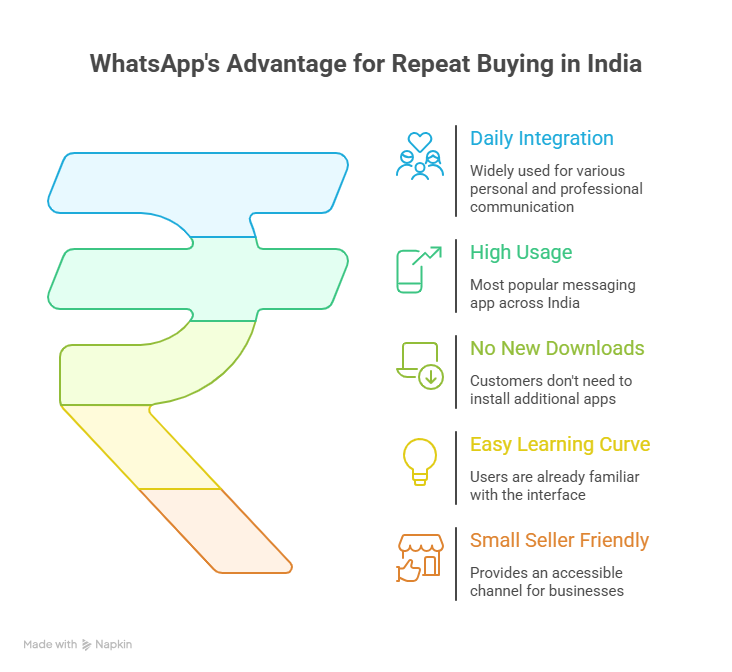
WhatsApp पहले से ही दैनिक भारतीय जीवन का हिस्सा है। लोग इसका इस्तेमाल फ़ैमिली ग्रुप, स्कूल मैसेज, ऑफ़िस के काम, हाउसिंग सोसाइटी और स्थानीय दुकानों के लिए करते हैं।
datareportal 2025 के अनुसार, WhatsApp भारत में शहरों और कस्बों में सबसे ज्यादा इस्तेमाल किया जाने वाला मैसेजिंग ऐप बना हुआ है। यह इसलिए ज़रूरी है क्योंकि ग्राहकों को आपके बिज़नेस से जुड़े रहने के लिए कुछ नया डाउनलोड करने या नया ऐप सीखने की ज़रूरत नहीं है।
एक छोटे विक्रेता के लिए, यह WhatsApp को याद रखने के लिए सबसे आसान चैनल बनाता है।
चरण 1: तय करें कि आपका WhatsApp समुदाय किसके लिए है
सभी को जोड़कर शुरू न करें।
स्पष्ट रूप से निर्णय लेने से शुरू करें:
इस समुदाय के अंदर कौन होना चाहिए
उन्हें क्यों रहना चाहिए
उदाहरण:
यदि आप महिलाओं की कुर्तियां बेचते हैं, तो आपका समुदाय उन महिलाओं के लिए है, जिन्होंने पहले ही एक बार खरीद लिया है या गंभीर रुचि दिखाई है।
यदि आप होम बेकरी चलाते हैं, तो आपका समुदाय बार-बार आने वाले ग्राहकों और त्यौहार खरीदारों के लिए है।
यहां स्पष्टता बाद में शोर से बचाती है।
चरण 2: अपना पहला WhatsApp समुदाय ठीक से बनाएं
इसके साथ एक WhatsApp समुदाय बनाएं:
एक घोषणा समूह
एक चर्चा समूह
इसे स्पष्ट रूप से और सम्मानपूर्वक नाम दें।
उदाहरण के नाम:
“शर्मा साड़ी के ग्राहक”
“अनाया बेकरी अपडेट्स”
“स्थानीय जैविक किराने के खरीदार”
“सर्वश्रेष्ठ ऑफ़र” या “डिस्काउंट ग्रुप” जैसे नामों से बचें। वे विश्वास को कम करते हैं।
चरण 3: शुरुआत में केवल भरोसेमंद लोगों को जोड़ें
छोटे से शुरू करें। यहां तक कि 15 से 30 लोग भी काफी हैं।
जोड़ें:
वे ग्राहक जो पहले ही खरीद चुके हैं
सकारात्मक प्रतिक्रिया देने वाले लोग
स्थानीय खरीदार जिन्हें आप व्यक्तिगत रूप से जानते हैं
हमेशा जोड़ने से पहले उन्हें सूचित करें। एक सरल संदेश जैसे:
“हम यहां अपडेट और शुरुआती जानकारी साझा करते हैं, क्या आप इसमें शामिल होना चाहेंगे?”
अनुमति विश्वास का निर्माण करती है।
चरण 4: समुदाय के अंदर क्या साझा करना है
कई विक्रेता केवल ऑफ़र पोस्ट करके यहां विफल हो जाते हैं।
एक स्वस्थ WhatsApp समुदाय में शामिल हैं:
नया स्टॉक या रीस्टॉक अपडेट
सरल उपयोग या देखभाल के टिप्स
परदे के पीछे का काम
ग्राहक फ़ीडबैक
सामयिक ऑफ़र
उदाहरण:
यदि आप स्किनकेयर बेचते हैं, तो इसे सही तरीके से उपयोग करने का तरीका साझा करें।
यदि आप कपड़े बेचते हैं, तो कपड़े की देखभाल के टिप्स साझा करें।
अगर आप खाना बेचते हैं, तो स्टोरेज या रीहीटिंग टिप्स शेयर करें।
यह समूह को उपयोगी बनाता है, परेशान करने वाला नहीं।
चरण 5: लोगों को परेशान किए बिना कितनी बार संदेश देना है
अधिकांश भारतीय ग्राहकों के लिए:
प्रति सप्ताह 2 से 3 संदेश पर्याप्त हैं
दैनिक संदेश भारी लगते हैं और म्यूटिंग की ओर ले जाते हैं।
आवृत्ति से अधिक संगति मायने रखती है। ग्राहकों को यह महसूस करना चाहिए कि आप मौजूद हैं, उनका पीछा नहीं कर रहे हैं।
चरण 6: स्थानीय स्तर पर अपने WhatsApp समुदाय का प्रचार कैसे करें
अधिकांश विक्रेताओं के लिए यह सबसे महत्वपूर्ण गुम कदम है।
स्थानीय रूप से शुरू करें। पहले डिजिटल मत सोचो।
वे तरीके जो वास्तव में भारत में काम करते हैं:
पोस्टर और प्रिंटआउट
अपने काउंटर या पैकिंग क्षेत्र के पास एक छोटा पोस्टर रखें:
“अपडेट और शुरुआती एक्सेस के लिए हमारे WhatsApp समुदाय से जुड़ें”
QR कोड्स
एक सरल WhatsApp जॉइन लिंक बनाएं और इसे एक qr कोड में बदलें।
इसे इस पर चिपकाएं:
शॉप काउंटर
विज़िटिंग कार्ड
बिल या इनवॉइस
पैकेजिंग बॉक्स
डिलीवरी के समय पूछें
ऑर्डर देते समय, विनम्रता से पूछें:
“क्या मैं आपको अपडेट के लिए हमारे WhatsApp समुदाय में जोड़ सकता हूं?”
स्थानीय वर्ड ऑफ़ माउथ
एक बार जब 10—15 लोग जुड़ जाते हैं, तो विकास स्वाभाविक हो जाता है। संतुष्ट ग्राहक स्वयं लिंक को फ़ॉरवर्ड करते हैं। टियर 2 और टियर 3 शहरों में, वर्ड ऑफ़ माउथ 2026 में भी विज्ञापनों से बेहतर काम करता है।
चरण 7: बिक्री को आगे बढ़ाए बिना मासिक खरीदारी को प्रोत्साहित करें
मासिक खरीदारी तब होती है जब ग्राहक वापस लौटने में सहज महसूस करते हैं।
आप इसे निम्न द्वारा प्रोत्साहित कर सकते हैं:
समुदाय के सदस्यों को जल्दी पहुंच प्रदान करना
आगामी लॉन्च को पहले से साझा करना
समूह में सार्वजनिक रूप से दोहराए जाने वाले खरीदारों को धन्यवाद देना
समुदाय के सदस्यों के लिए छोटे हस्तलिखित नोट्स जोड़ना
ये क्रियाएं भावनात्मक संबंध बनाती हैं, दबाव नहीं।
सामान्य गलतियाँ जो WhatsApp समुदाय के विश्वास को तोड़ती हैं
इन गलतियों से बचें:
बिना पूछे लोगों को जोड़ना
बहुत सारे प्रचार संदेश भेजना
जवाबों या सवालों को नज़रअंदाज़ करना
असंबंधित सामग्री को अग्रेषित करना
एक बार भरोसा टूट जाता है, तो लोग चुपचाप चले जाते हैं।
यह आपकी समग्र बिक्री यात्रा में कैसे फिट बैठता है
अधिकांश छोटे विक्रेताओं के लिए, यात्रा इस तरह दिखती है:
सामग्री ध्यान लाती है
इंस्टाग्राम डीएम पहले ऑर्डर लाता है
WhatsApp समुदाय रिपीट ऑर्डर लाता है
प्रत्येक चरण की अपनी भूमिका होती है। WhatsApp समुदाय देखभाल के बारे में है, पीछा करने के बारे में नहीं।
वास्तविक रूप से परिणामों की अपेक्षा कब करें
तत्काल मासिक बिक्री की उम्मीद न करें।
पहले महीने में, सगाई बढ़ जाती है।
दूसरे या तीसरे महीने में, रिपीट ऑर्डर शुरू हो जाते हैं।
यह धीमी लेकिन स्थिर वृद्धि हर हफ्ते चल रही छूट की तुलना में स्वास्थ्यवर्धक है।
निष्कर्ष
WhatsApp समुदाय एक दिन में नहीं बनाया जाता है। यह धैर्य, सम्मान और निरंतरता से बढ़ता है।
अगर आप ऐसे वफादार ग्राहक चाहते हैं जो हर महीने ख़रीदारी करें, तो ऑफ़र देने के बजाय एक शांत, उपयोगी WhatsApp समुदाय बनाने पर ध्यान दें। छोटे से शुरू करें, स्थानीय स्तर पर आगे बढ़ें, और ट्रस्ट को काम करने दें।
उन विक्रेताओं के लिए जो अभी भी प्रारंभिक दृश्यता, समझ पर काम कर रहे हैं मुफ्त में प्रचार कैसे करें समुदाय के नेतृत्व वाली वृद्धि शुरू होने के बाद यह एक समान रूप से महत्वपूर्ण कदम हो सकता है।
इसी तरह से भारतीय छोटे व्यवसाय 2026 में स्थिर आय का निर्माण करते हैं।
हर महीने ख़रीदारी करने वाले वफादार ग्राहक बनाने के लिए 2026 के लिए WhatsApp समुदाय गाइड
सुभम कुमार
-
February 17, 2026
-
एक बार ऑर्डर प्राप्त करना, फिर शून्य से फिर से शुरू करना
अपने पहले कुछ ऑर्डर प्राप्त करना रोमांचक लगता है। लेकिन अधिकांश छोटे व्यवसायों के लिए, असली चुनौती उसके बाद शुरू होती है। ऑर्डर एक बार आते हैं, फिर गायब हो जाते हैं। हर नया महीना फिर से शून्य से शुरू होने जैसा लगता है। यह वह जगह है जहाँ एक WhatsApp समुदाय भारतीय विक्रेताओं के लिए बेहद उपयोगी हो जाता है। ऑफ़र देने की जगह के रूप में नहीं, बल्कि परिचित होने, भरोसा बनाने और समय के साथ बार-बार खरीदारी करने की जगह के रूप में।
यह मार्गदर्शिका टियर 2 और टियर 3 शहरों में छोटे व्यवसाय मालिकों, घर विक्रेताओं, दुकान मालिकों और ऑनलाइन विक्रेताओं के लिए लिखी गई है, जो विज्ञापनों या जटिल टूल के बिना स्थिर मासिक ऑर्डर चाहते हैं।
एक छोटे बिज़नेस के लिए WhatsApp कम्यूनिटी का असल में क्या मतलब है
WhatsApp समुदाय एक स्ट्रक्चर्ड स्पेस है, जहां ग्राहक एक बार ख़रीदने के बाद भी आपके बिज़नेस से जुड़े रहते हैं।
बार-बार ग्राहकों का पीछा करने के बजाय, आप एक जगह बनाते हैं जहाँ:
अपडेट साझा किए जाते हैं
विश्वास धीरे-धीरे बढ़ता है
बार-बार खरीदना स्वाभाविक हो जाता है
WhatsApp समुदाय सुविधा की मदद से आप कई भ्रमित करने वाले ग्रुप चलाए बिना, इसे व्यवस्थित तरीके से प्रबंधित कर सकते हैं।
भारत में बार-बार खरीदारी करने के लिए WhatsApp सबसे अच्छा काम क्यों करता है
WhatsApp पहले से ही दैनिक भारतीय जीवन का हिस्सा है। लोग इसका इस्तेमाल फ़ैमिली ग्रुप, स्कूल मैसेज, ऑफ़िस के काम, हाउसिंग सोसाइटी और स्थानीय दुकानों के लिए करते हैं।
datareportal 2025 के अनुसार, WhatsApp भारत में शहरों और कस्बों में सबसे ज्यादा इस्तेमाल किया जाने वाला मैसेजिंग ऐप बना हुआ है। यह इसलिए ज़रूरी है क्योंकि ग्राहकों को आपके बिज़नेस से जुड़े रहने के लिए कुछ नया डाउनलोड करने या नया ऐप सीखने की ज़रूरत नहीं है।
एक छोटे विक्रेता के लिए, यह WhatsApp को याद रखने के लिए सबसे आसान चैनल बनाता है।
चरण 1: तय करें कि आपका WhatsApp समुदाय किसके लिए है
सभी को जोड़कर शुरू न करें।
स्पष्ट रूप से निर्णय लेने से शुरू करें:
इस समुदाय के अंदर कौन होना चाहिए
उन्हें क्यों रहना चाहिए
उदाहरण:
यदि आप महिलाओं की कुर्तियां बेचते हैं, तो आपका समुदाय उन महिलाओं के लिए है, जिन्होंने पहले ही एक बार खरीद लिया है या गंभीर रुचि दिखाई है।
यदि आप होम बेकरी चलाते हैं, तो आपका समुदाय बार-बार आने वाले ग्राहकों और त्यौहार खरीदारों के लिए है।
यहां स्पष्टता बाद में शोर से बचाती है।
चरण 2: अपना पहला WhatsApp समुदाय ठीक से बनाएं
इसके साथ एक WhatsApp समुदाय बनाएं:
एक घोषणा समूह
एक चर्चा समूह
इसे स्पष्ट रूप से और सम्मानपूर्वक नाम दें।
उदाहरण के नाम:
“शर्मा साड़ी के ग्राहक”
“अनाया बेकरी अपडेट्स”
“स्थानीय जैविक किराने के खरीदार”
“सर्वश्रेष्ठ ऑफ़र” या “डिस्काउंट ग्रुप” जैसे नामों से बचें। वे विश्वास को कम करते हैं।
चरण 3: शुरुआत में केवल भरोसेमंद लोगों को जोड़ें
छोटे से शुरू करें। यहां तक कि 15 से 30 लोग भी काफी हैं।
जोड़ें:
वे ग्राहक जो पहले ही खरीद चुके हैं
सकारात्मक प्रतिक्रिया देने वाले लोग
स्थानीय खरीदार जिन्हें आप व्यक्तिगत रूप से जानते हैं
हमेशा जोड़ने से पहले उन्हें सूचित करें। एक सरल संदेश जैसे:
“हम यहां अपडेट और शुरुआती जानकारी साझा करते हैं, क्या आप इसमें शामिल होना चाहेंगे?”
अनुमति विश्वास का निर्माण करती है।
चरण 4: समुदाय के अंदर क्या साझा करना है
कई विक्रेता केवल ऑफ़र पोस्ट करके यहां विफल हो जाते हैं।
एक स्वस्थ WhatsApp समुदाय में शामिल हैं:
नया स्टॉक या रीस्टॉक अपडेट
सरल उपयोग या देखभाल के टिप्स
परदे के पीछे का काम
ग्राहक फ़ीडबैक
सामयिक ऑफ़र
उदाहरण:
यदि आप स्किनकेयर बेचते हैं, तो इसे सही तरीके से उपयोग करने का तरीका साझा करें।
यदि आप कपड़े बेचते हैं, तो कपड़े की देखभाल के टिप्स साझा करें।
अगर आप खाना बेचते हैं, तो स्टोरेज या रीहीटिंग टिप्स शेयर करें।
यह समूह को उपयोगी बनाता है, परेशान करने वाला नहीं।
चरण 5: लोगों को परेशान किए बिना कितनी बार संदेश देना है
अधिकांश भारतीय ग्राहकों के लिए:
प्रति सप्ताह 2 से 3 संदेश पर्याप्त हैं
दैनिक संदेश भारी लगते हैं और म्यूटिंग की ओर ले जाते हैं।
आवृत्ति से अधिक संगति मायने रखती है। ग्राहकों को यह महसूस करना चाहिए कि आप मौजूद हैं, उनका पीछा नहीं कर रहे हैं।
चरण 6: स्थानीय स्तर पर अपने WhatsApp समुदाय का प्रचार कैसे करें
अधिकांश विक्रेताओं के लिए यह सबसे महत्वपूर्ण गुम कदम है।
स्थानीय रूप से शुरू करें। पहले डिजिटल मत सोचो।
वे तरीके जो वास्तव में भारत में काम करते हैं:
पोस्टर और प्रिंटआउट
अपने काउंटर या पैकिंग क्षेत्र के पास एक छोटा पोस्टर रखें:
“अपडेट और शुरुआती एक्सेस के लिए हमारे WhatsApp समुदाय से जुड़ें”
QR कोड्स
एक सरल WhatsApp जॉइन लिंक बनाएं और इसे एक qr कोड में बदलें।
इसे इस पर चिपकाएं:
शॉप काउंटर
विज़िटिंग कार्ड
बिल या इनवॉइस
पैकेजिंग बॉक्स
डिलीवरी के समय पूछें
ऑर्डर देते समय, विनम्रता से पूछें:
“क्या मैं आपको अपडेट के लिए हमारे WhatsApp समुदाय में जोड़ सकता हूं?”
स्थानीय वर्ड ऑफ़ माउथ
एक बार जब 10—15 लोग जुड़ जाते हैं, तो विकास स्वाभाविक हो जाता है। संतुष्ट ग्राहक स्वयं लिंक को फ़ॉरवर्ड करते हैं। टियर 2 और टियर 3 शहरों में, वर्ड ऑफ़ माउथ 2026 में भी विज्ञापनों से बेहतर काम करता है।
चरण 7: बिक्री को आगे बढ़ाए बिना मासिक खरीदारी को प्रोत्साहित करें
मासिक खरीदारी तब होती है जब ग्राहक वापस लौटने में सहज महसूस करते हैं।
आप इसे निम्न द्वारा प्रोत्साहित कर सकते हैं:
समुदाय के सदस्यों को जल्दी पहुंच प्रदान करना
आगामी लॉन्च को पहले से साझा करना
समूह में सार्वजनिक रूप से दोहराए जाने वाले खरीदारों को धन्यवाद देना
समुदाय के सदस्यों के लिए छोटे हस्तलिखित नोट्स जोड़ना
ये क्रियाएं भावनात्मक संबंध बनाती हैं, दबाव नहीं।
सामान्य गलतियाँ जो WhatsApp समुदाय के विश्वास को तोड़ती हैं
इन गलतियों से बचें:
बिना पूछे लोगों को जोड़ना
बहुत सारे प्रचार संदेश भेजना
जवाबों या सवालों को नज़रअंदाज़ करना
असंबंधित सामग्री को अग्रेषित करना
एक बार भरोसा टूट जाता है, तो लोग चुपचाप चले जाते हैं।
यह आपकी समग्र बिक्री यात्रा में कैसे फिट बैठता है
अधिकांश छोटे विक्रेताओं के लिए, यात्रा इस तरह दिखती है:
सामग्री ध्यान लाती है
इंस्टाग्राम डीएम पहले ऑर्डर लाता है
WhatsApp समुदाय रिपीट ऑर्डर लाता है
प्रत्येक चरण की अपनी भूमिका होती है। WhatsApp समुदाय देखभाल के बारे में है, पीछा करने के बारे में नहीं।
वास्तविक रूप से परिणामों की अपेक्षा कब करें
तत्काल मासिक बिक्री की उम्मीद न करें।
पहले महीने में, सगाई बढ़ जाती है।
दूसरे या तीसरे महीने में, रिपीट ऑर्डर शुरू हो जाते हैं।
यह धीमी लेकिन स्थिर वृद्धि हर हफ्ते चल रही छूट की तुलना में स्वास्थ्यवर्धक है।
निष्कर्ष
WhatsApp समुदाय एक दिन में नहीं बनाया जाता है। यह धैर्य, सम्मान और निरंतरता से बढ़ता है।
अगर आप ऐसे वफादार ग्राहक चाहते हैं जो हर महीने ख़रीदारी करें, तो ऑफ़र देने के बजाय एक शांत, उपयोगी WhatsApp समुदाय बनाने पर ध्यान दें। छोटे से शुरू करें, स्थानीय स्तर पर आगे बढ़ें, और ट्रस्ट को काम करने दें।
उन विक्रेताओं के लिए जो अभी भी प्रारंभिक दृश्यता, समझ पर काम कर रहे हैं मुफ्त में प्रचार कैसे करें समुदाय के नेतृत्व वाली वृद्धि शुरू होने के बाद यह एक समान रूप से महत्वपूर्ण कदम हो सकता है।
इसी तरह से भारतीय छोटे व्यवसाय 2026 में स्थिर आय का निर्माण करते हैं।
सन्दर्भ
व्हाट्सएप बिज़नेस
डेटा रिपोर्टल
ब्रेज़
पीला रोडरनर
5
min read
केंद्र में WhatsApp वाला फ़ोन दिखाने वाला एक वास्तविक दृश्य, जो बार-बार ग्राहकों, ऑर्डर और मासिक खरीदारी के संकेतों से घिरा हुआ है, जिसमें बताया गया है कि कैसे एक WhatsApp समुदाय छोटे व्यवसायों के प्रति वफादारी बनाता है।
एक बार ऑर्डर प्राप्त करना, फिर शून्य से फिर से शुरू करना
अपने पहले कुछ ऑर्डर प्राप्त करना रोमांचक लगता है। लेकिन अधिकांश छोटे व्यवसायों के लिए, असली चुनौती उसके बाद शुरू होती है। ऑर्डर एक बार आते हैं, फिर गायब हो जाते हैं। हर नया महीना फिर से शून्य से शुरू होने जैसा लगता है। यह वह जगह है जहाँ एक WhatsApp समुदाय भारतीय विक्रेताओं के लिए बेहद उपयोगी हो जाता है। ऑफ़र देने की जगह के रूप में नहीं, बल्कि परिचित होने, भरोसा बनाने और समय के साथ बार-बार खरीदारी करने की जगह के रूप में।
यह मार्गदर्शिका टियर 2 और टियर 3 शहरों में छोटे व्यवसाय मालिकों, घर विक्रेताओं, दुकान मालिकों और ऑनलाइन विक्रेताओं के लिए लिखी गई है, जो विज्ञापनों या जटिल टूल के बिना स्थिर मासिक ऑर्डर चाहते हैं।
एक छोटे बिज़नेस के लिए WhatsApp कम्यूनिटी का असल में क्या मतलब है
WhatsApp समुदाय एक स्ट्रक्चर्ड स्पेस है, जहां ग्राहक एक बार ख़रीदने के बाद भी आपके बिज़नेस से जुड़े रहते हैं।
बार-बार ग्राहकों का पीछा करने के बजाय, आप एक जगह बनाते हैं जहाँ:
अपडेट साझा किए जाते हैं
विश्वास धीरे-धीरे बढ़ता है
बार-बार खरीदना स्वाभाविक हो जाता है
WhatsApp समुदाय सुविधा की मदद से आप कई भ्रमित करने वाले ग्रुप चलाए बिना, इसे व्यवस्थित तरीके से प्रबंधित कर सकते हैं।
भारत में बार-बार खरीदारी करने के लिए WhatsApp सबसे अच्छा काम क्यों करता है
WhatsApp पहले से ही दैनिक भारतीय जीवन का हिस्सा है। लोग इसका इस्तेमाल फ़ैमिली ग्रुप, स्कूल मैसेज, ऑफ़िस के काम, हाउसिंग सोसाइटी और स्थानीय दुकानों के लिए करते हैं।
datareportal 2025 के अनुसार, WhatsApp भारत में शहरों और कस्बों में सबसे ज्यादा इस्तेमाल किया जाने वाला मैसेजिंग ऐप बना हुआ है। यह इसलिए ज़रूरी है क्योंकि ग्राहकों को आपके बिज़नेस से जुड़े रहने के लिए कुछ नया डाउनलोड करने या नया ऐप सीखने की ज़रूरत नहीं है।
एक छोटे विक्रेता के लिए, यह WhatsApp को याद रखने के लिए सबसे आसान चैनल बनाता है।
चरण 1: तय करें कि आपका WhatsApp समुदाय किसके लिए है
सभी को जोड़कर शुरू न करें।
स्पष्ट रूप से निर्णय लेने से शुरू करें:
इस समुदाय के अंदर कौन होना चाहिए
उन्हें क्यों रहना चाहिए
उदाहरण:
यदि आप महिलाओं की कुर्तियां बेचते हैं, तो आपका समुदाय उन महिलाओं के लिए है, जिन्होंने पहले ही एक बार खरीद लिया है या गंभीर रुचि दिखाई है।
यदि आप होम बेकरी चलाते हैं, तो आपका समुदाय बार-बार आने वाले ग्राहकों और त्यौहार खरीदारों के लिए है।
यहां स्पष्टता बाद में शोर से बचाती है।
चरण 2: अपना पहला WhatsApp समुदाय ठीक से बनाएं
इसके साथ एक WhatsApp समुदाय बनाएं:
एक घोषणा समूह
एक चर्चा समूह
इसे स्पष्ट रूप से और सम्मानपूर्वक नाम दें।
उदाहरण के नाम:
“शर्मा साड़ी के ग्राहक”
“अनाया बेकरी अपडेट्स”
“स्थानीय जैविक किराने के खरीदार”
“सर्वश्रेष्ठ ऑफ़र” या “डिस्काउंट ग्रुप” जैसे नामों से बचें। वे विश्वास को कम करते हैं।
चरण 3: शुरुआत में केवल भरोसेमंद लोगों को जोड़ें
छोटे से शुरू करें। यहां तक कि 15 से 30 लोग भी काफी हैं।
जोड़ें:
वे ग्राहक जो पहले ही खरीद चुके हैं
सकारात्मक प्रतिक्रिया देने वाले लोग
स्थानीय खरीदार जिन्हें आप व्यक्तिगत रूप से जानते हैं
हमेशा जोड़ने से पहले उन्हें सूचित करें। एक सरल संदेश जैसे:
“हम यहां अपडेट और शुरुआती जानकारी साझा करते हैं, क्या आप इसमें शामिल होना चाहेंगे?”
अनुमति विश्वास का निर्माण करती है।
चरण 4: समुदाय के अंदर क्या साझा करना है
कई विक्रेता केवल ऑफ़र पोस्ट करके यहां विफल हो जाते हैं।
एक स्वस्थ WhatsApp समुदाय में शामिल हैं:
नया स्टॉक या रीस्टॉक अपडेट
सरल उपयोग या देखभाल के टिप्स
परदे के पीछे का काम
ग्राहक फ़ीडबैक
सामयिक ऑफ़र
उदाहरण:
यदि आप स्किनकेयर बेचते हैं, तो इसे सही तरीके से उपयोग करने का तरीका साझा करें।
यदि आप कपड़े बेचते हैं, तो कपड़े की देखभाल के टिप्स साझा करें।
अगर आप खाना बेचते हैं, तो स्टोरेज या रीहीटिंग टिप्स शेयर करें।
यह समूह को उपयोगी बनाता है, परेशान करने वाला नहीं।
चरण 5: लोगों को परेशान किए बिना कितनी बार संदेश देना है
अधिकांश भारतीय ग्राहकों के लिए:
प्रति सप्ताह 2 से 3 संदेश पर्याप्त हैं
दैनिक संदेश भारी लगते हैं और म्यूटिंग की ओर ले जाते हैं।
आवृत्ति से अधिक संगति मायने रखती है। ग्राहकों को यह महसूस करना चाहिए कि आप मौजूद हैं, उनका पीछा नहीं कर रहे हैं।
चरण 6: स्थानीय स्तर पर अपने WhatsApp समुदाय का प्रचार कैसे करें
अधिकांश विक्रेताओं के लिए यह सबसे महत्वपूर्ण गुम कदम है।
स्थानीय रूप से शुरू करें। पहले डिजिटल मत सोचो।
वे तरीके जो वास्तव में भारत में काम करते हैं:
पोस्टर और प्रिंटआउट
अपने काउंटर या पैकिंग क्षेत्र के पास एक छोटा पोस्टर रखें:
“अपडेट और शुरुआती एक्सेस के लिए हमारे WhatsApp समुदाय से जुड़ें”
QR कोड्स
एक सरल WhatsApp जॉइन लिंक बनाएं और इसे एक qr कोड में बदलें।
इसे इस पर चिपकाएं:
शॉप काउंटर
विज़िटिंग कार्ड
बिल या इनवॉइस
पैकेजिंग बॉक्स
डिलीवरी के समय पूछें
ऑर्डर देते समय, विनम्रता से पूछें:
“क्या मैं आपको अपडेट के लिए हमारे WhatsApp समुदाय में जोड़ सकता हूं?”
स्थानीय वर्ड ऑफ़ माउथ
एक बार जब 10—15 लोग जुड़ जाते हैं, तो विकास स्वाभाविक हो जाता है। संतुष्ट ग्राहक स्वयं लिंक को फ़ॉरवर्ड करते हैं। टियर 2 और टियर 3 शहरों में, वर्ड ऑफ़ माउथ 2026 में भी विज्ञापनों से बेहतर काम करता है।
चरण 7: बिक्री को आगे बढ़ाए बिना मासिक खरीदारी को प्रोत्साहित करें
मासिक खरीदारी तब होती है जब ग्राहक वापस लौटने में सहज महसूस करते हैं।
आप इसे निम्न द्वारा प्रोत्साहित कर सकते हैं:
समुदाय के सदस्यों को जल्दी पहुंच प्रदान करना
आगामी लॉन्च को पहले से साझा करना
समूह में सार्वजनिक रूप से दोहराए जाने वाले खरीदारों को धन्यवाद देना
समुदाय के सदस्यों के लिए छोटे हस्तलिखित नोट्स जोड़ना
ये क्रियाएं भावनात्मक संबंध बनाती हैं, दबाव नहीं।
सामान्य गलतियाँ जो WhatsApp समुदाय के विश्वास को तोड़ती हैं
इन गलतियों से बचें:
बिना पूछे लोगों को जोड़ना
बहुत सारे प्रचार संदेश भेजना
जवाबों या सवालों को नज़रअंदाज़ करना
असंबंधित सामग्री को अग्रेषित करना
एक बार भरोसा टूट जाता है, तो लोग चुपचाप चले जाते हैं।
यह आपकी समग्र बिक्री यात्रा में कैसे फिट बैठता है
अधिकांश छोटे विक्रेताओं के लिए, यात्रा इस तरह दिखती है:
सामग्री ध्यान लाती है
इंस्टाग्राम डीएम पहले ऑर्डर लाता है
WhatsApp समुदाय रिपीट ऑर्डर लाता है
प्रत्येक चरण की अपनी भूमिका होती है। WhatsApp समुदाय देखभाल के बारे में है, पीछा करने के बारे में नहीं।
वास्तविक रूप से परिणामों की अपेक्षा कब करें
तत्काल मासिक बिक्री की उम्मीद न करें।
पहले महीने में, सगाई बढ़ जाती है।
दूसरे या तीसरे महीने में, रिपीट ऑर्डर शुरू हो जाते हैं।
यह धीमी लेकिन स्थिर वृद्धि हर हफ्ते चल रही छूट की तुलना में स्वास्थ्यवर्धक है।
निष्कर्ष
WhatsApp समुदाय एक दिन में नहीं बनाया जाता है। यह धैर्य, सम्मान और निरंतरता से बढ़ता है।
अगर आप ऐसे वफादार ग्राहक चाहते हैं जो हर महीने ख़रीदारी करें, तो ऑफ़र देने के बजाय एक शांत, उपयोगी WhatsApp समुदाय बनाने पर ध्यान दें। छोटे से शुरू करें, स्थानीय स्तर पर आगे बढ़ें, और ट्रस्ट को काम करने दें।
उन विक्रेताओं के लिए जो अभी भी प्रारंभिक दृश्यता, समझ पर काम कर रहे हैं मुफ्त में प्रचार कैसे करें समुदाय के नेतृत्व वाली वृद्धि शुरू होने के बाद यह एक समान रूप से महत्वपूर्ण कदम हो सकता है।
इसी तरह से भारतीय छोटे व्यवसाय 2026 में स्थिर आय का निर्माण करते हैं।
सन्दर्भ
व्हाट्सएप बिज़नेस
डेटा रिपोर्टल
ब्रेज़
पीला रोडरनर
Share Now
सुभम कुमार
अरे! मैं Wcommerce के संस्थापक कार्यालय से सुभम हूँ। मेरा काम शोध, उत्पाद रणनीति और सभी के लिए स्टोर प्रबंधन को आसान बनाने के इर्द-गिर्द घूमता है। मुझे विचारों को ऐसे व्यावहारिक टूल में बदलना अच्छा लगता है, जिन्हें स्टोर के मालिक वास्तव में उपयोग कर सकते हैं।
Finding trending products is easy. Choosing profitable ones is hard. Before you invest money or inventory, understand what actually sells. Here’s a practical India-focused guide for smart sellers in 2026.
Heading 1
Heading 2
Heading 3
Heading 4
Heading 5
Heading 6
Lorem ipsum dolor sit amet, consectetur adipiscing elit, sed do eiusmod tempor incididunt ut labore et dolore magna aliqua. Ut enim ad minim veniam, quis nostrud exercitation ullamco laboris nisi ut aliquip ex ea commodo consequat. Duis aute irure dolor in reprehenderit in voluptate velit esse cillum dolore eu fugiat nulla pariatur.
पहले से ही अपना स्टोर चला रहे हैं लेकिन सोच रहे हैं कि आगे क्या होगा? Amazon और Flipkart जैसे मार्केटप्लेस बड़े पैमाने पर खरीदार ट्रैफ़िक को अनलॉक कर सकते हैं। बिना किसी उलझन के शुरुआत करने में आपकी मदद करने के लिए यहां एक सरल, स्पष्ट मार्गदर्शिका दी गई है। भारत में बाज़ार में बिक्री करने वाले शुरुआती लोगों के लिए बिल्कुल सही।
Heading 1
Heading 2
Heading 3
Heading 4
Heading 5
Heading 6
Lorem ipsum dolor sit amet, consectetur adipiscing elit, sed do eiusmod tempor incididunt ut labore et dolore magna aliqua. Ut enim ad minim veniam, quis nostrud exercitation ullamco laboris nisi ut aliquip ex ea commodo consequat. Duis aute irure dolor in reprehenderit in voluptate velit esse cillum dolore eu fugiat nulla pariatur.
ऑनलाइन व्यवसाय शुरू करना रोमांचक है, लेकिन जीएसटी नियम अक्सर अनावश्यक तनाव पैदा करते हैं। यह मार्गदर्शिका सरल, सरल भाषा में सब कुछ बताती है जिसे कोई भी समझ सकता है। कोई तकनीकी शब्दजाल नहीं, कोई जटिल बात नहीं — बस स्पष्ट उत्तर जिनका आप वास्तव में उपयोग कर सकते हैं। छोटे व्यवसाय के मालिकों, नए विक्रेताओं और पहली बार काम करने वाले उद्यमियों के लिए बिल्कुल सही।
Heading 1
Heading 2
Heading 3
Heading 4
Heading 5
Heading 6
Lorem ipsum dolor sit amet, consectetur adipiscing elit, sed do eiusmod tempor incididunt ut labore et dolore magna aliqua. Ut enim ad minim veniam, quis nostrud exercitation ullamco laboris nisi ut aliquip ex ea commodo consequat. Duis aute irure dolor in reprehenderit in voluptate velit esse cillum dolore eu fugiat nulla pariatur.


.jpg)
.png)


.jpg)