What is Selling has moved to Instagram, WhatsApp and Facebook (Social Commerce in India) ?
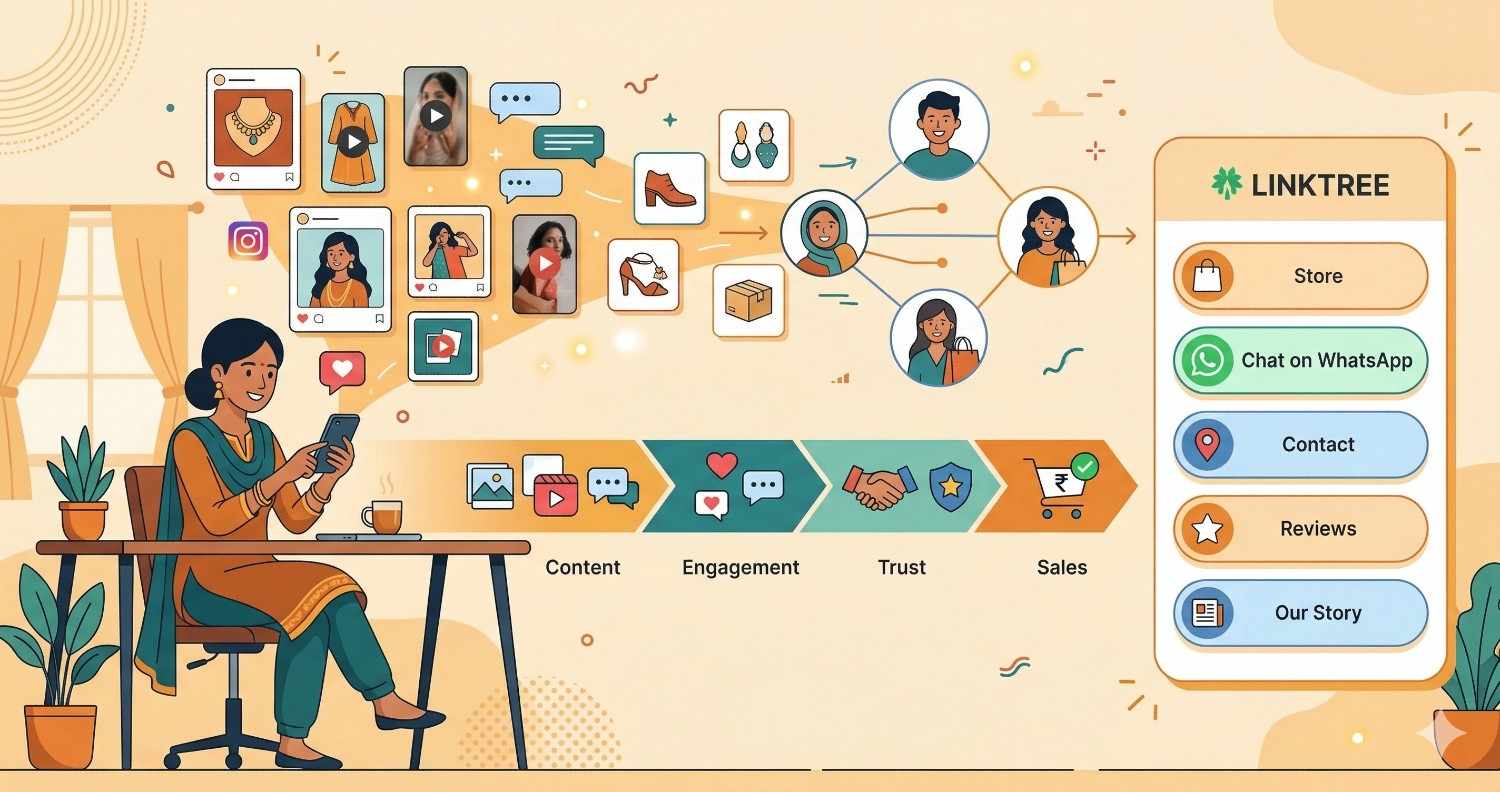
If you run a small business in India today, you must have noticed one thing clearly. Customers are not waiting for your website anymore. They are discovering products while scrolling Instagram, asking questions on WhatsApp, and sometimes even placing orders without ever leaving these apps.
This shift is called social commerce.
For many small sellers in tier 2 and tier 3 cities, this is not just a new concept. It is slowly becoming the easiest way to start and grow a business without heavy investment.
In this guide, you will understand what social commerce really means, how it works in real life, and how you can start step by step, even if you are not very tech-savvy.
What is social commerce?
Social commerce is the process of selling products directly through social media platforms like Instagram, Facebook, and WhatsApp.
Simple definition
Social commerce means customers can:
- discover your product
- talk to you
- and buy from you
all inside social media apps without going to a website.
This is different from traditional ecommerce where everything happens on a website.
According to Salesforce (2024), social commerce brings the entire shopping journey — from discovery to checkout — directly inside social media platforms.
Why social commerce is growing so fast
This is not just a trend. It is a big shift in how people shop.
According to Salesforce, around 76% of consumers have bought a product after seeing it on social media.
Another report by Elementor (2026) highlights that social commerce is now a core part of online shopping, not just an extra channel.
What this means for small sellers
- Customers trust what they see daily
- People prefer chatting before buying
- Buying decisions are becoming faster
In simple words, your customer is already online. You just need to meet them there.
Why social commerce works especially well in India
In India, especially in smaller cities, buying behaviour is very relationship-driven.
According to industry insights:
- People prefer talking before paying
- Trust matters more than brand name
- Recommendations influence decisions
Affordable internet and smartphones have made it easy for anyone to become both a buyer and a seller.
Real life example
A kurti seller in Lucknow:
- posts reels on Instagram
- customers message on WhatsApp
- after a short conversation, order is confirmed
No website. No ads. Just trust.
How social commerce actually works
Let us break it down in a simple, practical flow.
Step 1: customer discovers your product
- Instagram reel
- Facebook post
- WhatsApp status
Step 2: customer shows interest
- sends DM
- replies to status
- comments on post
Step 3: you talk to the customer
- share product details
- send photos or videos
- answer doubts
Step 4: order confirmation
- customer shares address
- selects product
Step 5: payment
Step 6: delivery
- you ship product
- update customer
This simple system is what thousands of small Indian sellers are already using daily.
Selling on Instagram (simple guide)
Instagram is the best platform for visual products.
What sells well
- clothing
- jewellery
- beauty products
- home decor
How to start
- post reels showing product use
- share customer reviews
- reply quickly to messages
- use highlights for products
Example
A small jewellery seller:
- posts 1 reel daily
- replies to all DMs within 10 minutes
- shares customer photos
This alone can generate daily orders.
Selling on WhatsApp (where most sales happen)
WhatsApp is where real conversion happens.
Why WhatsApp works
- personal feeling
- instant communication
- high trust
How to use it
- create product catalogue
- post daily status updates
- send offers to customers
Example
A home baker:
- uploads cake photos on status
- customers reply directly
- orders get confirmed within minutes
No technical skills needed.
Selling on Facebook (still powerful in smaller cities)
Facebook is still strong, especially for local selling.
Where to focus
- local groups
- marketplace
- community pages
Example
A furniture seller:
- posts in local groups
- gets inquiries
- closes deals via WhatsApp
Social commerce vs ecommerce (simple difference)
Ecommerce
- website needed
- setup cost
- depends on ads
Social commerce
- no website needed
- low cost
- based on conversation
Easy way to understand
Ecommerce = online shop
Social commerce = talking and selling like a local shopkeeper
Real challenges small sellers face
Let us be honest. Social commerce is not always easy.
1. too many messages
Handling:
- Instagram
- WhatsApp
- Facebook
can become stressful.
2. fake or timepass customers
- asking too many questions
- not ordering
3. COD and RTO losses
- customer not accepting order
- money loss
4. managing orders manually
- confusion in address
- missed orders
5. pressure of competition
- many sellers selling same products
Practical solutions that actually work
1. build trust first
- show real videos
- show packing process
- share reviews
2. reply fast
Speed = sales
Slow reply = lost customer
3. reduce COD risk
- ask for small advance
- offer discount on prepaid
4. keep system simple
- maintain orders in Google Sheet or notebook
- track payments
5. focus on repeat customers
Returning customers = stable income
Future of social commerce in India
Social commerce is not going away.
According to global data:
- 45% of people have already purchased directly through social apps
- market size is expected to grow massively in coming years
What this means
- more competition
- but also more opportunity
Those who start early will benefit the most.
Who should start social commerce
You should start if you are:
- home based seller
- small shop owner
- reseller
- coach or trainer
- local brand
If you already use WhatsApp and Instagram daily, you already have everything you need.
Conclusion
Social commerce is simply a smarter and more practical way of selling in today’s time.
If you understand what is social commerce and start using Instagram, WhatsApp, and Facebook properly, you can build a business without heavy investment or complex systems.
Start simple:
- post regularly
- talk to customers
- take orders manually
- improve slowly
Focus on trust, not perfection.
That is how most successful small sellers in India are growing today.
Frequently asked questions
What is social commerce in simple words?
Social commerce means selling products directly through social media apps like Instagram, Facebook, and WhatsApp without using a website.
Is social commerce better than ecommerce?
For small sellers, yes. It is easier to start, needs less investment, and builds stronger customer relationships.
Can I start social commerce without investment?
Yes. You only need:
- a smartphone
- internet
- products
You can start with zero setup cost.
Which platform is best for beginners?
- Instagram for reach
- WhatsApp for conversion
- Facebook for local selling
Using all three together works best.
How do I avoid fake orders?
- confirm details properly
- ask small advance payment
- build trust before taking order
Do I need a website for social commerce?
No. Many sellers run successful businesses only using WhatsApp and Instagram.
References
- Salesforce
- Elementor
- Sprout Social
- Invest India
- SellersCommerce



.png)