SEO for ecommerce stores: keywords, titles and descriptions that drive traffic
Subham Kumar
-
March 16, 2026
-
How small ecommerce stores can get found on google (SEO for ecommerce)
Running an ecommerce store in India today is exciting, but it can also feel confusing.
You build a website. Upload products. Add prices. Maybe even run a few ads.
But then something strange happens.
Hardly anyone visits the website.
This is a common problem for small ecommerce sellers. Whether you are selling ayurvedic products, home decor, handmade clothing, or fitness items, the challenge is the same.
People cannot buy from your store if they cannot find your store.
This is where SEO for ecommerce becomes important.
SEO simply means helping search engines understand your ecommerce website so they can show it to people searching for products like yours.
Think of SEO like placing your shop in the right market street.
If your shop is hidden in a narrow lane, very few people walk in. But if your shop is visible on the main road, customers naturally discover it.
Online, google search is that main road.
What SEO for ecommerce actually means
In simple words:
SEO for ecommerce means making your product pages easier for google to understand and show in search results.
When someone searches something like:
cotton bedsheet king size
ayurvedic hair oil for hair growth
wooden temple for home
Google tries to show the most relevant ecommerce websites.
If your website clearly mentions these products using proper keywords, titles, and descriptions, google understands your page better and may show it to buyers.
This process is called organic search ranking.
Ecommerce SEO focuses mainly on:
keyword research
product page optimisation
category page optimisation
technical improvements
These steps help bring organic traffic for an online store, meaning visitors who come without paid ads.
Why SEO matters for small ecommerce businesses
Many small sellers depend heavily on ads or marketplaces.
But ads can quickly become expensive.
Courier charges increase. Returns affect profits. Cash flow becomes tight. Every rupee spent on marketing matters.
SEO helps reduce this pressure.
According to a BrightEdge study (2023), 68 percent of all online experiences begin with a search engine.
That means most buyers start their shopping journey by searching something on google.
If your ecommerce website appears in those searches, customers discover your products naturally.
Another important point comes from Google Search Central guidance. Google explains that ecommerce websites become easier to discover when their product pages clearly describe the product and share structured information like price, availability, and reviews.
In simple terms:
Clear product information helps google trust your website.
Understanding ecommerce keyword research
Before writing anything on your ecommerce website, you need to know how customers search.
This is called ecommerce keyword research.
It simply means identifying the words people type when looking for products online.
Many sellers make a common mistake.
They use creative product names that customers never search.
For example:
A seller writes this product title:
“royal luxury sleep experience bedsheet”
But customers actually search:
“cotton bedsheet king size”
So google struggles to connect the product with the search.
A simple way to find keywords
Here is a method any small seller can use.
Open google and type your product name.
For example:
type “wooden temple”
Google will automatically show suggestions like:
wooden temple for home
wooden temple small size
wooden temple wall mount
These suggestions are real searches made by customers.
You can use these phrases in product titles and descriptions.
That is the foundation of ecommerce SEO strategy.
Why long tail keywords work better for small sellers
Many ecommerce sellers try to rank for very big keywords like:
bedsheet
wallet
furniture
But large brands dominate those searches.
Instead, small stores should focus on long tail keywords for ecommerce.
These are longer, more specific searches.
For example:
cotton bedsheet king size breathable
handmade leather wallet for men
ayurvedic hair oil for hair fall
These keywords usually bring buyers who already know what they want.
This means better chances of sales.
How to write SEO friendly product titles
Product titles are one of the most important elements of ecommerce SEO.
Google reads the product title first to understand what the page is about.
Google itself recommends that product titles should clearly describe the product shown on the page.
A good title usually includes:
product name
important feature
size or variant
Example
Bad title:
premium luxury bedsheet collection
Better title:
cotton bedsheet king size breathable summer bedsheet
Another example for a skincare product:
neem turmeric handmade soap for acne prone skin
These titles match how customers actually search.
This improves SEO product titles and descriptions.
Writing product descriptions that help customers and google
Many ecommerce stores copy descriptions from suppliers.
This creates duplicate content across many websites.
Search engines prefer unique content.
Instead, write descriptions the way you would explain a product to a customer in a shop.
Example
If you sell copper bottles, your description could say:
“This copper bottle is suitable for daily drinking water at home or office. Many people prefer copper bottles as part of traditional wellness habits. The bottle is strong, reusable, and easy to carry.”
This type of writing answers customer questions and improves product page SEO optimization.
Why category pages are powerful for ecommerce SEO
Most sellers focus only on product pages.
But category pages are equally important.
Category pages group similar products together and help users browse easily.
For example:
cotton bedsheets
ayurvedic hair oils
wooden home decor
Search engines often rank these pages because they cover a broader topic and link to many product pages.
Example
If you run a bedsheet store, a category introduction could say:
“Cotton bedsheets are widely used in Indian homes because they stay breathable during summer. Our collection includes king size and double bed bedsheets designed for daily comfort.”
Even two or three sentences help search engines understand the page.
Technical SEO for ecommerce websites explained simply
Technical SEO sounds complicated, but most of it is basic website hygiene.
Good technical SEO for ecommerce websites includes:
fast loading pages
mobile friendly design
simple navigation
clean product urls
For example, a good product link looks like:
yourstore.com/cotton-bedsheet-king-size
But a confusing link like this is not helpful:
yourstore.com/product?id=3827
Another important improvement is structured product data.
This is special information added to product pages that helps google understand details like price, availability, and reviews.
When this data is added, your product listings can appear in richer search results.
How organic traffic grows for ecommerce stores
The real goal of ecommerce SEO is organic traffic.
Organic traffic means visitors coming from search engines without ads.
However, SEO takes time.
Unlike ads, results do not appear instantly.
Search engines need time to crawl, understand, and trust your ecommerce website.
Think of SEO like building reputation in a local market.
At first, only a few customers know your shop.
But as more people hear about it, more customers start visiting.
SEO works in a similar way.
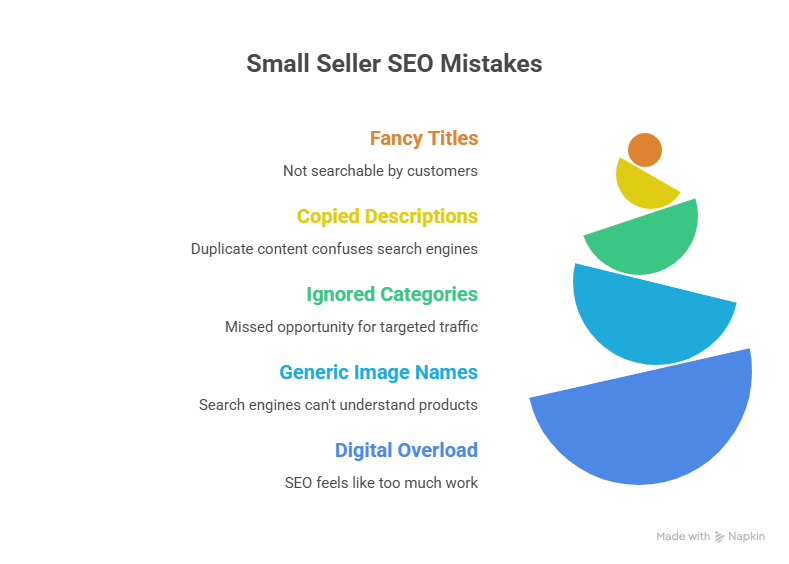
Common SEO mistakes small sellers make
Many small ecommerce businesses unknowingly make simple mistakes.
Some examples include:
Using fancy product titles instead of searchable ones.
Copying supplier descriptions.
Ignoring category pages.
Uploading images with names like IMG1234.
Instead, rename images properly.
For example:
cotton-bedsheet-king-size.jpg
This helps search engines understand the product.
Another common problem is digital overload.
Small sellers already manage inventory, packaging, courier partners, and customer complaints.
Learning SEO feels like one more complicated task.
The key is to focus on a few improvements consistently.
A practical SEO routine for small ecommerce stores
If you run a small ecommerce website, this simple routine works well. The goal is not only to bring traffic but also to improve your conversion rate, meaning more visitors actually become customers.
First, identify keywords using Google suggestions. This helps your products appear when people search for them online.
Second, improve product titles using clear product names and important features so visitors immediately understand what you are selling.
Third, write helpful product descriptions that answer customer questions and build trust. Clear descriptions often increase the conversion rate because buyers feel more confident about purchasing.
Fourth, add short introductions to category pages so search engines and customers both understand what products the section contains.
Finally, ensure your website loads quickly and works smoothly on mobile devices. A fast, easy-to-use store can significantly improve your conversion rate since visitors are less likely to leave before completing their purchase.
These steps gradually build a strong ecommerce SEO strategy while also helping turn more visitors into paying customers.
Conclusion
For many sellers, SEO initially feels technical.
But in reality, SEO for ecommerce is mostly about clarity.
SEO for ecommerce stores: keywords, titles and descriptions that drive traffic
Subham Kumar
-
March 16, 2026
-
How small ecommerce stores can get found on google (SEO for ecommerce)
Running an ecommerce store in India today is exciting, but it can also feel confusing.
You build a website. Upload products. Add prices. Maybe even run a few ads.
But then something strange happens.
Hardly anyone visits the website.
This is a common problem for small ecommerce sellers. Whether you are selling ayurvedic products, home decor, handmade clothing, or fitness items, the challenge is the same.
People cannot buy from your store if they cannot find your store.
This is where SEO for ecommerce becomes important.
SEO simply means helping search engines understand your ecommerce website so they can show it to people searching for products like yours.
Think of SEO like placing your shop in the right market street.
If your shop is hidden in a narrow lane, very few people walk in. But if your shop is visible on the main road, customers naturally discover it.
Online, google search is that main road.
What SEO for ecommerce actually means
In simple words:
SEO for ecommerce means making your product pages easier for google to understand and show in search results.
When someone searches something like:
cotton bedsheet king size
ayurvedic hair oil for hair growth
wooden temple for home
Google tries to show the most relevant ecommerce websites.
If your website clearly mentions these products using proper keywords, titles, and descriptions, google understands your page better and may show it to buyers.
This process is called organic search ranking.
Ecommerce SEO focuses mainly on:
keyword research
product page optimisation
category page optimisation
technical improvements
These steps help bring organic traffic for an online store, meaning visitors who come without paid ads.
Why SEO matters for small ecommerce businesses
Many small sellers depend heavily on ads or marketplaces.
But ads can quickly become expensive.
Courier charges increase. Returns affect profits. Cash flow becomes tight. Every rupee spent on marketing matters.
SEO helps reduce this pressure.
According to a BrightEdge study (2023), 68 percent of all online experiences begin with a search engine.
That means most buyers start their shopping journey by searching something on google.
If your ecommerce website appears in those searches, customers discover your products naturally.
Another important point comes from Google Search Central guidance. Google explains that ecommerce websites become easier to discover when their product pages clearly describe the product and share structured information like price, availability, and reviews.
In simple terms:
Clear product information helps google trust your website.
Understanding ecommerce keyword research
Before writing anything on your ecommerce website, you need to know how customers search.
This is called ecommerce keyword research.
It simply means identifying the words people type when looking for products online.
Many sellers make a common mistake.
They use creative product names that customers never search.
For example:
A seller writes this product title:
“royal luxury sleep experience bedsheet”
But customers actually search:
“cotton bedsheet king size”
So google struggles to connect the product with the search.
A simple way to find keywords
Here is a method any small seller can use.
Open google and type your product name.
For example:
type “wooden temple”
Google will automatically show suggestions like:
wooden temple for home
wooden temple small size
wooden temple wall mount
These suggestions are real searches made by customers.
You can use these phrases in product titles and descriptions.
That is the foundation of ecommerce SEO strategy.
Why long tail keywords work better for small sellers
Many ecommerce sellers try to rank for very big keywords like:
bedsheet
wallet
furniture
But large brands dominate those searches.
Instead, small stores should focus on long tail keywords for ecommerce.
These are longer, more specific searches.
For example:
cotton bedsheet king size breathable
handmade leather wallet for men
ayurvedic hair oil for hair fall
These keywords usually bring buyers who already know what they want.
This means better chances of sales.
How to write SEO friendly product titles
Product titles are one of the most important elements of ecommerce SEO.
Google reads the product title first to understand what the page is about.
Google itself recommends that product titles should clearly describe the product shown on the page.
A good title usually includes:
product name
important feature
size or variant
Example
Bad title:
premium luxury bedsheet collection
Better title:
cotton bedsheet king size breathable summer bedsheet
Another example for a skincare product:
neem turmeric handmade soap for acne prone skin
These titles match how customers actually search.
This improves SEO product titles and descriptions.
Writing product descriptions that help customers and google
Many ecommerce stores copy descriptions from suppliers.
This creates duplicate content across many websites.
Search engines prefer unique content.
Instead, write descriptions the way you would explain a product to a customer in a shop.
Example
If you sell copper bottles, your description could say:
“This copper bottle is suitable for daily drinking water at home or office. Many people prefer copper bottles as part of traditional wellness habits. The bottle is strong, reusable, and easy to carry.”
This type of writing answers customer questions and improves product page SEO optimization.
Why category pages are powerful for ecommerce SEO
Most sellers focus only on product pages.
But category pages are equally important.
Category pages group similar products together and help users browse easily.
For example:
cotton bedsheets
ayurvedic hair oils
wooden home decor
Search engines often rank these pages because they cover a broader topic and link to many product pages.
Example
If you run a bedsheet store, a category introduction could say:
“Cotton bedsheets are widely used in Indian homes because they stay breathable during summer. Our collection includes king size and double bed bedsheets designed for daily comfort.”
Even two or three sentences help search engines understand the page.
Technical SEO for ecommerce websites explained simply
Technical SEO sounds complicated, but most of it is basic website hygiene.
Good technical SEO for ecommerce websites includes:
fast loading pages
mobile friendly design
simple navigation
clean product urls
For example, a good product link looks like:
yourstore.com/cotton-bedsheet-king-size
But a confusing link like this is not helpful:
yourstore.com/product?id=3827
Another important improvement is structured product data.
This is special information added to product pages that helps google understand details like price, availability, and reviews.
When this data is added, your product listings can appear in richer search results.
How organic traffic grows for ecommerce stores
The real goal of ecommerce SEO is organic traffic.
Organic traffic means visitors coming from search engines without ads.
However, SEO takes time.
Unlike ads, results do not appear instantly.
Search engines need time to crawl, understand, and trust your ecommerce website.
Think of SEO like building reputation in a local market.
At first, only a few customers know your shop.
But as more people hear about it, more customers start visiting.
SEO works in a similar way.
Common SEO mistakes small sellers make
Many small ecommerce businesses unknowingly make simple mistakes.
Some examples include:
Using fancy product titles instead of searchable ones.
Copying supplier descriptions.
Ignoring category pages.
Uploading images with names like IMG1234.
Instead, rename images properly.
For example:
cotton-bedsheet-king-size.jpg
This helps search engines understand the product.
Another common problem is digital overload.
Small sellers already manage inventory, packaging, courier partners, and customer complaints.
Learning SEO feels like one more complicated task.
The key is to focus on a few improvements consistently.
A practical SEO routine for small ecommerce stores
If you run a small ecommerce website, this simple routine works well. The goal is not only to bring traffic but also to improve your conversion rate, meaning more visitors actually become customers.
First, identify keywords using Google suggestions. This helps your products appear when people search for them online.
Second, improve product titles using clear product names and important features so visitors immediately understand what you are selling.
Third, write helpful product descriptions that answer customer questions and build trust. Clear descriptions often increase the conversion rate because buyers feel more confident about purchasing.
Fourth, add short introductions to category pages so search engines and customers both understand what products the section contains.
Finally, ensure your website loads quickly and works smoothly on mobile devices. A fast, easy-to-use store can significantly improve your conversion rate since visitors are less likely to leave before completing their purchase.
These steps gradually build a strong ecommerce SEO strategy while also helping turn more visitors into paying customers.
Conclusion
For many sellers, SEO initially feels technical.
But in reality, SEO for ecommerce is mostly about clarity.
Update product titles so they match how customers search.
Rewrite descriptions in simple language.
Add short explanations to category pages.
Over time, these small improvements help your ecommerce website appear in more search results.
And when that happens, more customers can finally discover the products you worked hard to build and sell.
References
Semrush Google search central Neil patel digital marketing blog BrightEdge research report
5
min read
A dark room represents the internet. A person with a Google search head holds a bright torchlight, revealing glowing text that says “your ecommerce store” while shelves of products remain hidden in the shadows. The scene symbolises how search engines help people discover online stores.
How small ecommerce stores can get found on google (SEO for ecommerce)
Running an ecommerce store in India today is exciting, but it can also feel confusing.
You build a website. Upload products. Add prices. Maybe even run a few ads.
But then something strange happens.
Hardly anyone visits the website.
This is a common problem for small ecommerce sellers. Whether you are selling ayurvedic products, home decor, handmade clothing, or fitness items, the challenge is the same.
People cannot buy from your store if they cannot find your store.
This is where SEO for ecommerce becomes important.
SEO simply means helping search engines understand your ecommerce website so they can show it to people searching for products like yours.
Think of SEO like placing your shop in the right market street.
If your shop is hidden in a narrow lane, very few people walk in. But if your shop is visible on the main road, customers naturally discover it.
Online, google search is that main road.
What SEO for ecommerce actually means
In simple words:
SEO for ecommerce means making your product pages easier for google to understand and show in search results.
When someone searches something like:
cotton bedsheet king size
ayurvedic hair oil for hair growth
wooden temple for home
Google tries to show the most relevant ecommerce websites.
If your website clearly mentions these products using proper keywords, titles, and descriptions, google understands your page better and may show it to buyers.
This process is called organic search ranking.
Ecommerce SEO focuses mainly on:
keyword research
product page optimisation
category page optimisation
technical improvements
These steps help bring organic traffic for an online store, meaning visitors who come without paid ads.
Why SEO matters for small ecommerce businesses
Many small sellers depend heavily on ads or marketplaces.
But ads can quickly become expensive.
Courier charges increase. Returns affect profits. Cash flow becomes tight. Every rupee spent on marketing matters.
SEO helps reduce this pressure.
According to a BrightEdge study (2023), 68 percent of all online experiences begin with a search engine.
That means most buyers start their shopping journey by searching something on google.
If your ecommerce website appears in those searches, customers discover your products naturally.
Another important point comes from Google Search Central guidance. Google explains that ecommerce websites become easier to discover when their product pages clearly describe the product and share structured information like price, availability, and reviews.
In simple terms:
Clear product information helps google trust your website.
Understanding ecommerce keyword research
Before writing anything on your ecommerce website, you need to know how customers search.
This is called ecommerce keyword research.
It simply means identifying the words people type when looking for products online.
Many sellers make a common mistake.
They use creative product names that customers never search.
For example:
A seller writes this product title:
“royal luxury sleep experience bedsheet”
But customers actually search:
“cotton bedsheet king size”
So google struggles to connect the product with the search.
A simple way to find keywords
Here is a method any small seller can use.
Open google and type your product name.
For example:
type “wooden temple”
Google will automatically show suggestions like:
wooden temple for home
wooden temple small size
wooden temple wall mount
These suggestions are real searches made by customers.
You can use these phrases in product titles and descriptions.
That is the foundation of ecommerce SEO strategy.
Why long tail keywords work better for small sellers
Many ecommerce sellers try to rank for very big keywords like:
bedsheet
wallet
furniture
But large brands dominate those searches.
Instead, small stores should focus on long tail keywords for ecommerce.
These are longer, more specific searches.
For example:
cotton bedsheet king size breathable
handmade leather wallet for men
ayurvedic hair oil for hair fall
These keywords usually bring buyers who already know what they want.
This means better chances of sales.
How to write SEO friendly product titles
Product titles are one of the most important elements of ecommerce SEO.
Google reads the product title first to understand what the page is about.
Google itself recommends that product titles should clearly describe the product shown on the page.
A good title usually includes:
product name
important feature
size or variant
Example
Bad title:
premium luxury bedsheet collection
Better title:
cotton bedsheet king size breathable summer bedsheet
Another example for a skincare product:
neem turmeric handmade soap for acne prone skin
These titles match how customers actually search.
This improves SEO product titles and descriptions.
Writing product descriptions that help customers and google
Many ecommerce stores copy descriptions from suppliers.
This creates duplicate content across many websites.
Search engines prefer unique content.
Instead, write descriptions the way you would explain a product to a customer in a shop.
Example
If you sell copper bottles, your description could say:
“This copper bottle is suitable for daily drinking water at home or office. Many people prefer copper bottles as part of traditional wellness habits. The bottle is strong, reusable, and easy to carry.”
This type of writing answers customer questions and improves product page SEO optimization.
Why category pages are powerful for ecommerce SEO
Most sellers focus only on product pages.
But category pages are equally important.
Category pages group similar products together and help users browse easily.
For example:
cotton bedsheets
ayurvedic hair oils
wooden home decor
Search engines often rank these pages because they cover a broader topic and link to many product pages.
Example
If you run a bedsheet store, a category introduction could say:
“Cotton bedsheets are widely used in Indian homes because they stay breathable during summer. Our collection includes king size and double bed bedsheets designed for daily comfort.”
Even two or three sentences help search engines understand the page.
Technical SEO for ecommerce websites explained simply
Technical SEO sounds complicated, but most of it is basic website hygiene.
Good technical SEO for ecommerce websites includes:
fast loading pages
mobile friendly design
simple navigation
clean product urls
For example, a good product link looks like:
yourstore.com/cotton-bedsheet-king-size
But a confusing link like this is not helpful:
yourstore.com/product?id=3827
Another important improvement is structured product data.
This is special information added to product pages that helps google understand details like price, availability, and reviews.
When this data is added, your product listings can appear in richer search results.
How organic traffic grows for ecommerce stores
The real goal of ecommerce SEO is organic traffic.
Organic traffic means visitors coming from search engines without ads.
However, SEO takes time.
Unlike ads, results do not appear instantly.
Search engines need time to crawl, understand, and trust your ecommerce website.
Think of SEO like building reputation in a local market.
At first, only a few customers know your shop.
But as more people hear about it, more customers start visiting.
SEO works in a similar way.
Common SEO mistakes small sellers make
Many small ecommerce businesses unknowingly make simple mistakes.
Some examples include:
Using fancy product titles instead of searchable ones.
Copying supplier descriptions.
Ignoring category pages.
Uploading images with names like IMG1234.
Instead, rename images properly.
For example:
cotton-bedsheet-king-size.jpg
This helps search engines understand the product.
Another common problem is digital overload.
Small sellers already manage inventory, packaging, courier partners, and customer complaints.
Learning SEO feels like one more complicated task.
The key is to focus on a few improvements consistently.
A practical SEO routine for small ecommerce stores
If you run a small ecommerce website, this simple routine works well. The goal is not only to bring traffic but also to improve your conversion rate, meaning more visitors actually become customers.
First, identify keywords using Google suggestions. This helps your products appear when people search for them online.
Second, improve product titles using clear product names and important features so visitors immediately understand what you are selling.
Third, write helpful product descriptions that answer customer questions and build trust. Clear descriptions often increase the conversion rate because buyers feel more confident about purchasing.
Fourth, add short introductions to category pages so search engines and customers both understand what products the section contains.
Finally, ensure your website loads quickly and works smoothly on mobile devices. A fast, easy-to-use store can significantly improve your conversion rate since visitors are less likely to leave before completing their purchase.
These steps gradually build a strong ecommerce SEO strategy while also helping turn more visitors into paying customers.
Conclusion
For many sellers, SEO initially feels technical.
But in reality, SEO for ecommerce is mostly about clarity.
Update product titles so they match how customers search.
Rewrite descriptions in simple language.
Add short explanations to category pages.
Over time, these small improvements help your ecommerce website appear in more search results.
And when that happens, more customers can finally discover the products you worked hard to build and sell.
References
Semrush Google search central Neil patel digital marketing blog BrightEdge research report
Share Now
Subham Kumar
Hey! I’m Subham from the Founder’s Office at Wcommerce. My work revolves around research, product strategy, and making store management easier for everyone. I love turning ideas into practical tools that store owners can actually use.
Running ads can feel confusing, especially when money goes but sales do not come. This guide breaks everything down into simple steps so small sellers can run Facebook and Instagram ads with confidence. Learn how to create ads, test them, and improve results without wasting money.
Heading 1
Heading 2
Heading 3
Heading 4
Heading 5
Heading 6
Lorem ipsum dolor sit amet, consectetur adipiscing elit, sed do eiusmod tempor incididunt ut labore et dolore magna aliqua. Ut enim ad minim veniam, quis nostrud exercitation ullamco laboris nisi ut aliquip ex ea commodo consequat. Duis aute irure dolor in reprehenderit in voluptate velit esse cillum dolore eu fugiat nulla pariatur.
Social commerce is changing how small businesses sell in India. You no longer need a website or big budget to get started. This guide explains how you can use Instagram, WhatsApp, and Facebook to find customers, build trust, and start selling step by step in a simple way.
Heading 1
Heading 2
Heading 3
Heading 4
Heading 5
Heading 6
Lorem ipsum dolor sit amet, consectetur adipiscing elit, sed do eiusmod tempor incididunt ut labore et dolore magna aliqua. Ut enim ad minim veniam, quis nostrud exercitation ullamco laboris nisi ut aliquip ex ea commodo consequat. Duis aute irure dolor in reprehenderit in voluptate velit esse cillum dolore eu fugiat nulla pariatur.
Influencer marketing in India isn't just for big brands. This guide shows small store owners how to find the right influencers, work with them on a tight budget, and turn their followers into your customers — step by step.
Heading 1
Heading 2
Heading 3
Heading 4
Heading 5
Heading 6
Lorem ipsum dolor sit amet, consectetur adipiscing elit, sed do eiusmod tempor incididunt ut labore et dolore magna aliqua. Ut enim ad minim veniam, quis nostrud exercitation ullamco laboris nisi ut aliquip ex ea commodo consequat. Duis aute irure dolor in reprehenderit in voluptate velit esse cillum dolore eu fugiat nulla pariatur.



.png)